
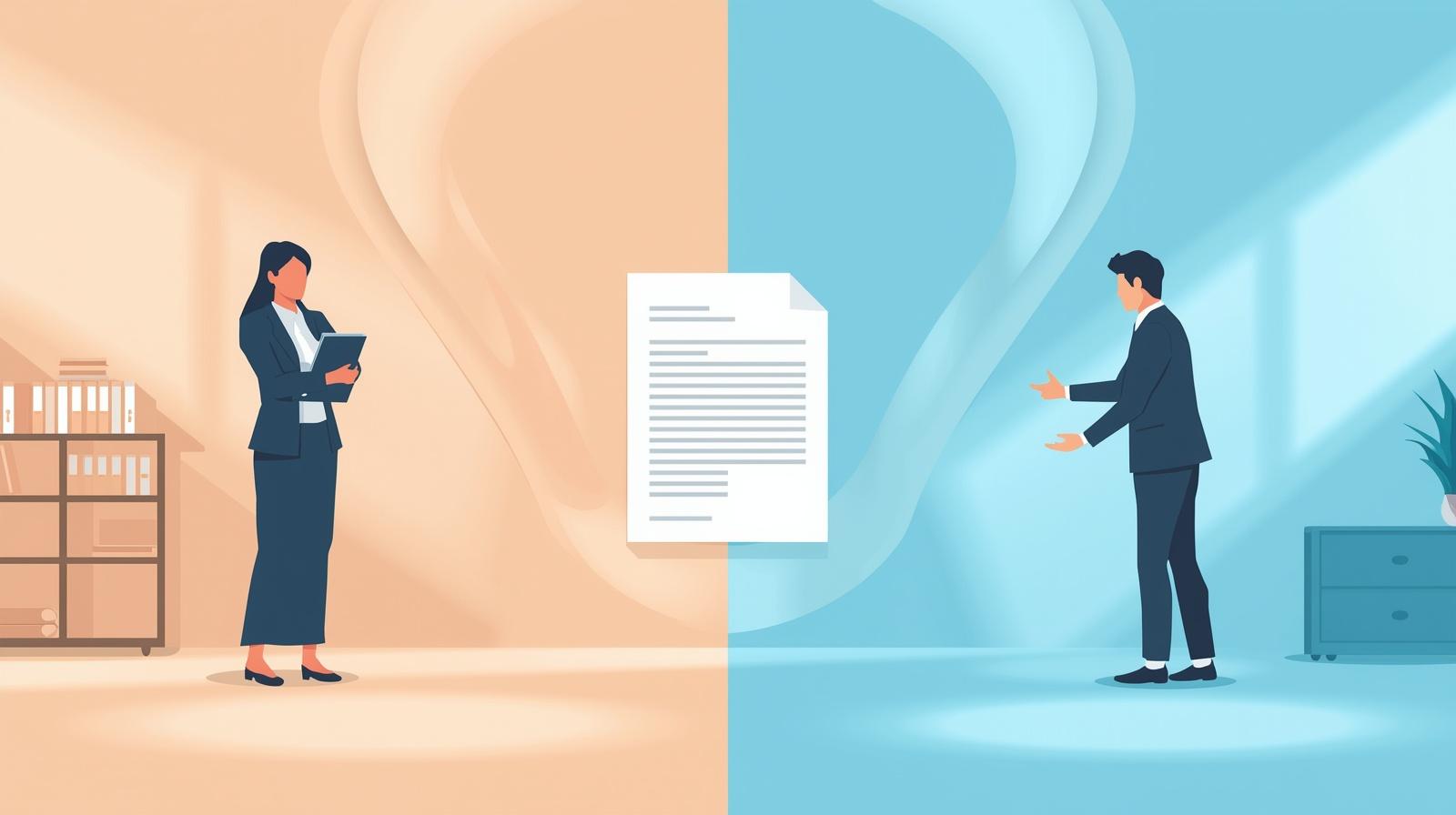
You did the work. You delivered the product. You held up your end of the agreement. And now the other party isn't paying, isn't performing, or is pretending the whole thing never happened.
Before you spend thousands on litigation—or write off the loss—there's a step most people skip: a demand letter.
A demand letter is a formal written notice that you are owed something, what you're owed, and what happens if you don't receive it. It costs almost nothing to send and resolves a surprising number of disputes without any further action required. Many courts also expect you to have made a good-faith demand before filing a claim.
Here's how to write one that actually gets taken seriously.
What Makes a Demand Letter Different from a Cease and Desist
A cease and desist tells someone to stop doing something. A demand letter tells someone to do something—usually pay money, fulfill an obligation, or return property.
The structure is similar, but the demand itself is different. You're not just asserting rights; you're claiming a specific remedy and giving the other party a clear path to resolving the dispute without litigation.
When to Send a Demand Letter
Demand letters are appropriate any time you have a concrete, articulable claim against another party:
- A client hasn't paid an invoice
- A contractor didn't finish work you paid for
- A landlord is withholding your security deposit without justification
- A business partner owes you money under your operating agreement
- A vendor delivered defective goods and won't refund or replace them
- Someone damaged your property and hasn't compensated you
If your primary concern is an unpaid invoice, see How to Collect on Unpaid Invoices for the full escalation process—from payment reminders through small claims court.
Demand letters are also a prerequisite in some legal contexts. Many small claims courts require evidence that you attempted to resolve the matter before filing. Some contracts include dispute resolution clauses that require a written demand before arbitration or litigation can begin. Sending the letter first keeps your options open.
The Elements of an Effective Demand Letter
1. Your identifying information
Full legal name, business name if applicable, address, and contact information. If you're representing a business, use the business entity's name.
2. The recipient's identifying information
Name the individual or entity you're writing to. If it's a company, address it to a specific person—the owner, CEO, or whoever has authority to resolve the matter.
3. A summary of the background
Briefly explain the relationship and context. You delivered a website build under a contract dated January 15. They paid a deposit but haven't paid the remaining balance despite project completion on March 1. Keep this factual and chronological.
4. The specific amount or remedy you're demanding
Don't be vague. State the exact dollar amount owed, the specific action required, or the precise remedy you're seeking. If you're owed $8,400, say $8,400—not "a significant amount" or "the balance due."
5. The legal or contractual basis for your claim
Explain why they owe you this. Reference the contract, invoice, agreement, or legal principle that supports your claim. You don't need to cite statutes, but the reader should understand why you have a right to what you're demanding.
6. A deadline
Give them a specific date by which you expect compliance. Ten to fourteen business days is standard for payment demands. If the matter is urgent, you can shorten it—just make sure the timeline is realistic enough that they can actually comply.
7. A statement of consequences
Make clear what happens if they don't comply. "If I do not receive payment by [date], I will pursue all available legal remedies, including filing a claim in [small claims / civil court] and seeking recovery of court costs and attorney's fees where permitted by law."
8. Your signature and date
Sign the letter. Date it. If you're signing on behalf of a business entity, include your title.
Sample Demand Letter for Unpaid Invoice
Here's a template you can adapt for the most common use case—an unpaid invoice:
[Your Name / Business Name] [Address] [City, State, ZIP] [Date]
[Recipient Name / Business Name] [Address] [City, State, ZIP]
RE: Demand for Payment — Invoice #[Invoice Number], $[Amount]
Dear [Recipient Name],
This letter constitutes a formal demand for payment of $[Amount], which is owed to [Your Business Name] under the agreement entered into on [Contract Date].
Background: On [date], [Your Business Name] entered into a [service/product] agreement with [Recipient Name] to [brief description of work/product]. The agreed total was $[Total Amount], of which $[Amount Paid] has been received. The remaining balance of $[Amount Owed] became due on [Due Date] and remains unpaid as of the date of this letter.
Demand: You are hereby demanded to remit full payment of $[Amount Owed] within 10 business days of the date of this letter.
Consequences of Non-Payment: If payment is not received by [specific date], [Your Business Name] will pursue all available legal remedies, including but not limited to filing a civil claim for the full amount owed plus applicable interest, court costs, and attorney's fees as permitted by applicable law.
Please remit payment to [payment instructions] or contact me at [contact information] to resolve this matter before that date.
Sincerely,
[Your Signature] [Your Name, Title]
Don't want to start from scratch? Talking Tree's Redwood Assistant can draft a demand letter tailored to your situation—just describe what happened and get a professional letter in minutes.
Tone and Length
Keep it professional. Keep it short. A demand letter is not the place to relitigate every grievance or express how frustrated you are. The goal is to communicate a clear legal position and a clear path to resolution.
Two pages is the outer limit for most demand letters. One page is better. Courts and opposing parties alike respond better to concise, factual letters than to lengthy emotional narratives.
Avoid:
- Insults or personal attacks
- Exaggerated claims about what you'll do if ignored
- Threats that aren't legally available to you (e.g., "I will have you arrested")
- Emotional language that undercuts your professionalism
Include:
- Specific facts with dates
- The exact amount or remedy requested
- A realistic deadline
- A reference to applicable contracts or agreements
How to Send It
Send your demand letter via certified mail with return receipt requested. This gives you proof of delivery—critical if the matter proceeds to court.
Also send it via email so the recipient has it immediately and you have a digital record. Keep copies of everything: the letter itself, your proof of mailing, and any responses you receive.
What Happens After You Send It
Most people respond to a well-written demand letter in one of four ways:
They pay or comply: Great. Document it.
They respond with a counteroffer or dispute: Engage in good faith. This is often the beginning of a resolution. You may want an attorney's help if the dispute is complex or the amount is significant.
They ask for more time: Use your judgment. A legitimate request for a brief extension is usually worth granting if they're communicating in good faith.
They ignore it: Now you have a record of your attempt to resolve the matter. File in small claims court (for amounts within the limit in your state, typically $5,000–$25,000), or consult an attorney about your options for larger claims.
Small Claims Court: Your Next Step for Most Payment Disputes
If your demand is ignored and the amount is within your state's small claims limit, small claims court is often the most practical next step. Filing fees are low (typically $30–$100), you don't need an attorney, and judges are accustomed to handling unpaid invoice disputes quickly.
Your demand letter becomes evidence of your good-faith attempt to resolve the matter and documentation that the other party had notice of your claim.
When to Involve an Attorney
Demand letters for most payment disputes, security deposit refunds, and straightforward contract breaches are something most people can handle themselves. But involve an attorney when:
- The amount at stake is significant (generally $10,000+)
- The legal basis for your claim is unclear or disputed
- You're dealing with a large company or sophisticated party
- You've sent a demand letter and received a hostile or legally complex response
- The matter involves complex contracts, real property, or potential counterclaims
For the full process of collecting unpaid invoices (including what to do before and after sending a demand letter), see How to Collect on Unpaid Invoices.
Need to send a demand letter? Talking Tree's Redwood Assistant can draft one for your specific situation—describe what happened and get a professional letter in minutes, without the hourly rate.